In the art of novel writing, authors throughout history have employed different strategies in developing the plot of a story. The novel, unlike its more condense companion, the short story, depends on meticulous progress in reaching the climax and resolution of the narrative. So vital to the success of a novel is the use of chapters to separate and distinguish different parts of the story. The use of chapters has many advantages, including giving the reader a sense of accomplishment when finishing one, allowing for convenient thought or discussion on unique sections of a story, and, most importantly, to serve as a microcosm in illustrating what an author intends to say about his characters.
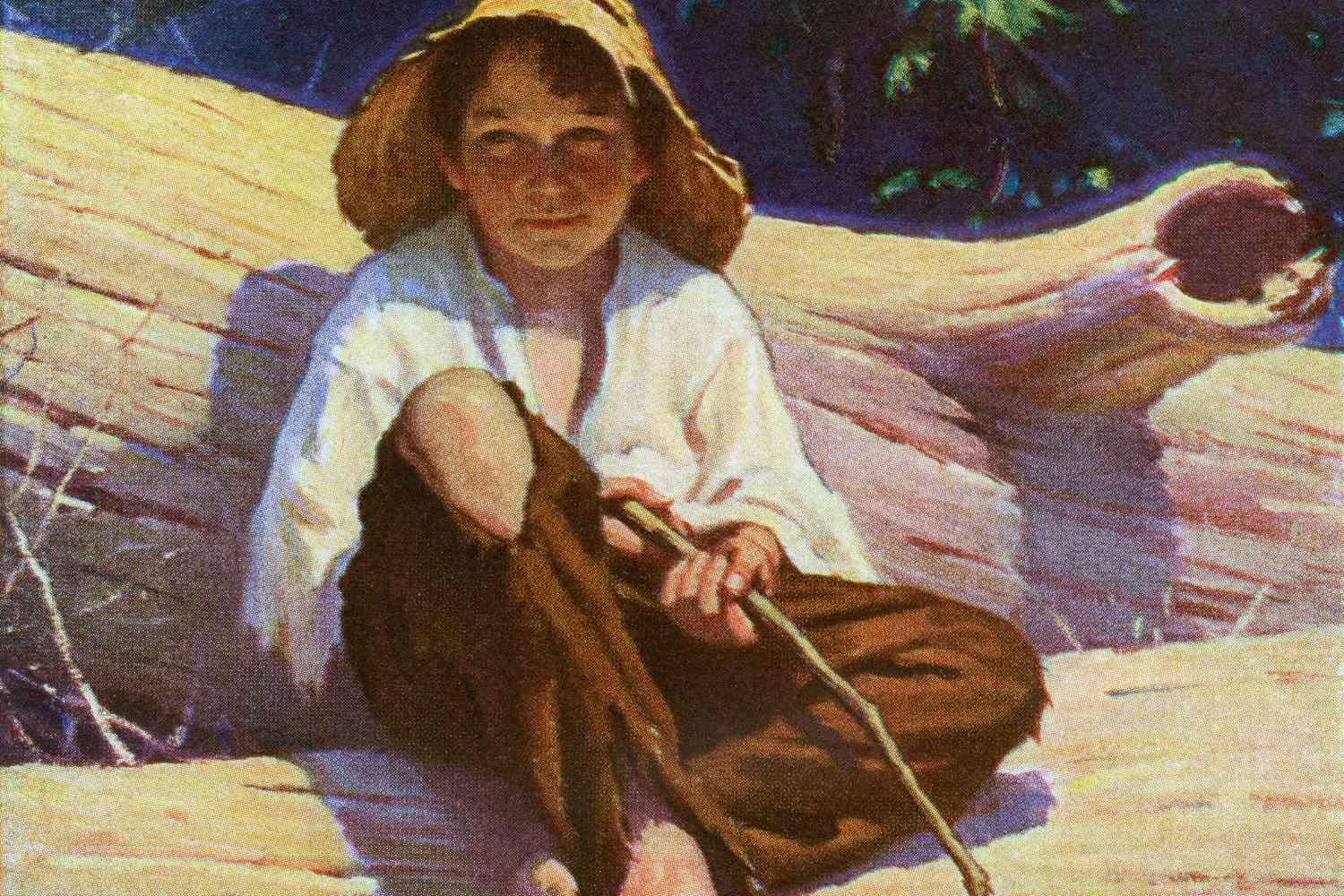
In the great American novel The Adventures of Huckleberry Finn, author Mark Twain ingeniously weaves 43 chapters into an interlocking masterpiece. Twain includes a variety of subplots in his story to enhance the significance of his overall product. These subplots are conveniently separated into chapters, and the reader is allowed to expand on Twain’s general concerns. One of the themes of the novel is the emotional growth of Huck. The first 16 chapters tell the story of an adventurous young boy who is immature (or perhaps just uneducated or inexperienced), but quite “street smart.” However, with the subsequent chapters 17 and 18 we find Twain cut a terribly grim spin on the story, and Huck’s character is forever changed.
At the end of Chapter 16, Huck and his companion, the runaway slave Jim, are forced to dive from their raft and into the river because of the rush of an upstream boat. Huck loses sight of Jim, but manages to reach safety on land. After a long trek, Huck stumbles across a double log house, and a group of dogs begins to bark at him.
Thus begins the infamous set of days that would change Huck’s life. The Grangerford family is aroused by the dogs’ howling, and the man of the house speaks from the window without poking his head outside. The Grangerfords are on guard because of a feud with a rival family, the Shepherdsons, and the man inquires if Huck knows of the family. After a brief dialogue, Huck is allowed to enter the home, at which point the old man feels he is no threat. However, we get the impression immediately that Huck is not in the best of circumstances, because “as soon as [Huck] was in the old gentleman he locked the door and barred it and bolted it” (135). Though he may not know it, Huck’s creator has placed him in a situation he will not be able to wiggle away from.
The youngest Grangerford son Buck is immediately receptive to the idea of having Huck stay with the family. He is excited about the idea of having a boy his age to play and hunt with, perhaps seeing in Buck an image of his old friend Tom Sawyer. But Buck is no play date in a cave. Twain’s use of the name “Buck” is the first key to understanding his literary motive in Chapters 17 and 18. Twain uses a name similar to Huck’s to establish the foundation for the culmination of his subplot towards the end of Chapter 18. Buck and Huck are eerily similar, not only in name, but in interests and personality, because Buck tells Huck “about a bluejay and a young rabbit he had catched in the woods day before yesterday, and he asked [Huck] where Moses was when the candle went out” (136). The adventure in the woods and the topic of Moses is reminiscent of earlier parts of the novel when Huck and Tom Sawyer were still adventuring together.
After Huck dreams up a story to explain to the Grangerfords his aimless wandering through the countryside, Twain allows him to narrate briefly on the design of the house and the objects contained therein. At first glance, this part of the novel appears boring and useless, but another look at this passage reveals Twain’s motives. Huck observes the stylish country house, including “a clock on the middle of the mantelpiece, … and you could see the pendulum swinging behind it. It was beautiful to hear that clock tick” (139). More detail surrounding this simple observation suggests that Twain is foreshadowing upcoming danger. The clock of preservation and life is ticking on the Grangerfords, and more indirectly, Huck’s raw innocence.
Huck enjoys many days of comfort and good food before the clock ticks out of control. He and Buck embark on adventures in the woods. Huck first feels the severity of the feud between the Grangerfords and the Shepherdsons when Buck shoots at Harney Shepherdson. What Huck thought was an innocent quarrel between families, just another adventure, suddenly turns to stark reality in his mind. Twain again foreshadows impending circumstances when Buck returns to the house to tell his story to the family. While the other members of the family take little notice of the account other than the simple curiosity in knowing if Harney is dead or not, Twain is explicit in noting Sophia’s keen interest in the development of Buck’s story, noting that “she turned pale, but the color come back when she found the man warn’t hurt” (150).
This foreshadowing sets up the climax of the subplot—the running away of Sophia to meet Harney Shepherdson and the ensuing gun fight between the families. Huck awakens one day to an empty house, and learns from Jack that the entire family rushed to prevent the fleeing of Sophia with the Shepherdson fellow. Huck runs out to find Buck in hopes that his friend is not caught in the gunfire. Huck finds a tree to hide in, but his refuge serves only to keep his physical existence safe; his psyche, however, is changed forever. The scene to which he bears witness transforms his childlike existence, which forces his young mind and heart to tackle life’s most heinous and unforgiving acts.
Buck’s death provides a figurehead for the death of Huck’s innocence, the death of Huck as the reader knew him. Huck watches his friend die, not in the act of playtime, but in cruel reality. He cries “a little when [he] was covering up Buck’s face, for he was mighty good to [him]” (160). Huck is far removed from the friendly gang with which he had been associated. He is far removed from the mockery of death of which Tom and the gang had once talked. Huck is forced to take a step in maturity because no longer is death a surreal fantasy set in faraway caves. No longer is it unthinkable to think of his own death. No longer is death a game.
Chapters 17 and 18 of Twain’s classic serve as a distinct section of the novel, but also as deft illustration of a microcosm. It is the transitional part of the novel where we find Huck take a necessary step towards emotional maturity. One can be quite certain that this experience is not welcomed by Huck himself, but fortunately for him, his creator Mark Twain knows of Huck’s future encounters and relationship with a runaway slave and deems it necessary for the good of the growing boy. As the story progresses the reader finds that this encounter with death allows Huck the maturity to make tough decisions and grow and the reader’s respect for him grows.