All “STORM” entries were written during a time of quarantine due to Hurricane Laura in 2020.
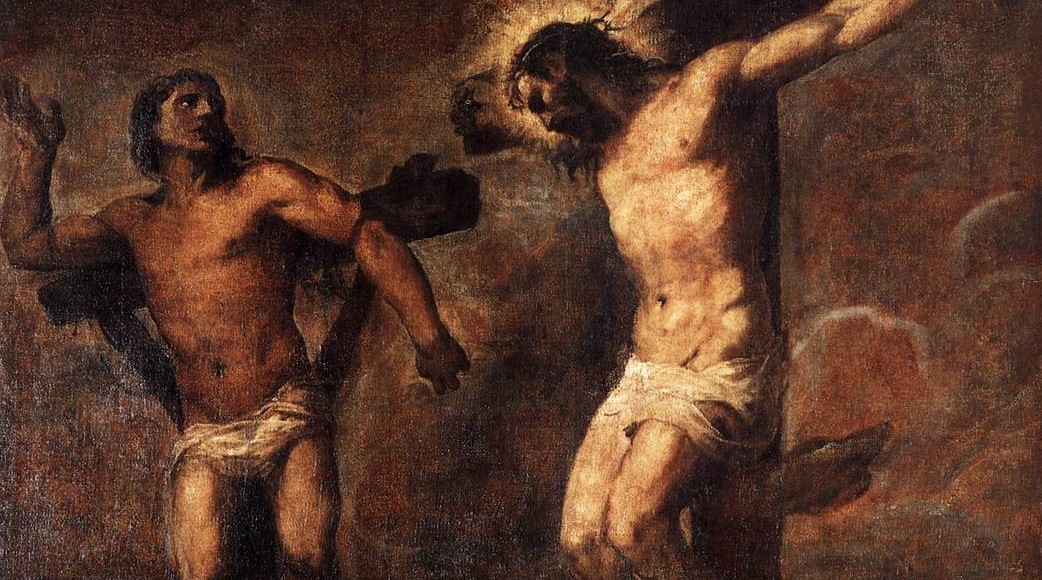
The good thief is good only because some miraculous transfiguration of soul occurred on that cross. His crucifixion was more than physical; his sins were crucified as well, and in some way he experienced they type of death Jesus suffered. Christ took the form of a criminal and was crucified as one to save criminals from their sins; Dismas was a criminal himself, and in a second crucifixion, the sins that had become his person were also nailed to the wood so that a new life could spring forth.
It was a transfiguration that was no doubt offered to the other thief as well. Fear of God, clearly a healthy one right at the twilight of life, is what saved Dismas. It isn’t the perfect way, which is to repent from sin based on our love for God, but it is a way. I am reminded of a part of a prayer in a novena to the Holy Ghost, which asks for “fear of the Lord, that should the motive of love fail me, I may quickly be awakened to the eternal consequences of my deeds.” God gives us opportunity after opportunity, and method after method, to cooperate with Christ as he works for our salvation. I have no doubt that had I turned from the obvious request, perhaps even command, of God himself early this year as I navigated the journey through Joseph and Mary, I might have lost my final chance at the Divine Mercy he is offering before his Divine Justice comes.
As the Blessed Virgin stood before her Son as he suffered on that cross, is there any doubt that her motherly prayers helped saved Dismas? If she who could see before anyone else a need for wine at the Wedding at Cana, the first spectacular event of her Son’s life, would she not have seen the need for repentance and sorrow from the crucified thieves in his final one before his resurrection? There was something different inside Dismas that the other thief did not have—and it is that “something” that illustrates the need for our cooperation in the salvation of our own souls. For certainly, Mary did not just see the need in one; she prayed for the repentance of both, yet only one of the two had the publican’s heart, the prodigal son’s repentance (Lk 15:11-32), the sinful woman’s sorrow (Lk 7:36-50, among others), enough to move Jesus’ to compassion.
Two men went up into the temple to pray: the one a Pharisee standing, prayed thus with himself: O God, I give thee thanks that I am not as the rest of men, extortioners, unjust, adulterers, as also is this publican. I fast twice in a week: I give tithes of all that I possess.
And the publican, standing afar off, would not so much as lift up his eyes towards heaven; but struck his breast, saying: O God, be merciful to me a sinner.
I say to you, this man went down into his house justified rather than the other; because every one that exalteth himself shall be humbled; and he that humbleth himself shall be exulted. (Lk 18:10-14)
Just before this parable, Chapter 15 of Luke reads “Now the publicans and sinners drew near to hear him. And the Pharisees and the scribes murmured, saying: This man receiveth sinners, and eateth with them” (Lk 15:1-2). At every turn in the Gospels, we are presented with a choice, and the choice is simple: we either choose humility and repentance, or we earn the wrath of God. There are numerous examples of Jesus attacking the Pharisees, who continue in their smug pride as they blasphemed him at the cross, providing a herd for the wicked thief stuck in his sin forever to follow. The question is, if Jesus is all-merciful, why the constant shaming of the Pharisees and Sadducees?
The answer is simple: PRIDE.
The one sin Christ hates most is pride. It was the sin of Adam and Eve that set everything awry. It was the sin that Mary and Joseph reversed in its entirety with their ever-present, humble fiat to God the Father. They obeyed, whereas our first parents didn’t. This is the central decision I have made this year, explored at length in Dear John, that I believe has set my life afire, that has led me to the unique blessing of now understanding Divine Mercy. It is not blind obedience in a spirit of fear; it is following the model of Mary and Joseph, of the publican. It is avoiding the attitude of the Pharisee, of the unrepentant thief. The sin of pride is a silent killer of the soul, simply because by its very nature it refuses or is unable to see what is wrong with it.
And Jesus said: for judgment I am come into this world, that they who see not, may see, and they who see, may become blind.
And some of the Pharisees, who were with him, heard, and they said unto him: Are we also blind?
Jesus said to them: If you were blind, you should not have sin; but now you say, We see. Your sin remaineth. (Jn 9:39-41).
There is much more to the story before this, which involves a blind man Jesus heals, and the silly challenges from the Pharisees. But the point is that spiritual blindness is rooted in the grave sin of pride, the sin of the original fall. Even hanging on the cross in agony, mere hours from his death and eternal consequence, one thief cannot, even in the face of Mary’s prayers, repent. He is simply unable to see what is so plain to Dismas, who cooperated with the grace granted to him by Jesus right next to him, prayed for by the Blessed Mother herself.